
3 COUNTIES CONCRETE
Commercial Concrete Pour Checklist: How to Prepare Your Construction Site for Success

4.9/5.0 Rating
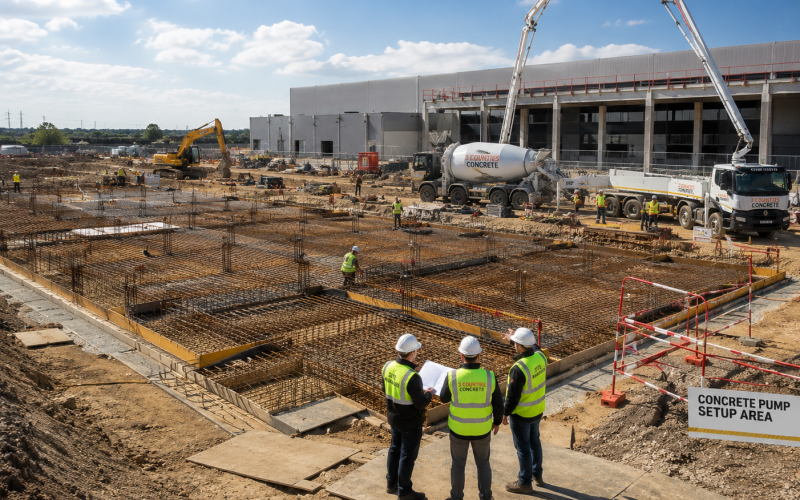
A successful commercial concrete pour doesn’t just happen overnight – it takes careful planning, a spotless site, and some seriously good coordination between contractors, suppliers, and site teams to get it right.
When you’re dealing with massive volumes of concrete, multiple deliveries, heavy equipment and tight deadlines, even the smallest slip-up can throw the whole project off kilter. So, if you’re working on foundations, slabs, walls, loading bays or industrial floors – it’s worth having a structured checklist to follow to keep the project on track.
Below, we’ve outlined all the key steps you should take to get your site ship-shape for a commercial concrete pour.
Why You Need to Get It Right in Commercial Concrete Projects
Concrete placement is one of the most time-sensitive parts of any construction project – and once the mix leaves the batching plant, time is of the essence. You’ve got to get the concrete to the site, pour it into position, finish it off and let it cure – all within a very tight window.
So, what happens if you don’t get it right? Well, for starters, you could end up with delayed pours, wasted concrete, extra labour costs, pump hire overruns, structural defects, programme delays and even health and safety risks. Not to mention, a well-organised site helps to avoid all those pesky problems and gets that concrete poured into place smoothly and efficiently.
Before You Even Think About the Site
Before you start tackling the site itself, there are a few planning tasks that need to be wrapped up first.
Get the Concrete Mix and Quality Materials Right
You can’t have too much emphasis on getting the project’s mix design right – especially if you’re working on a big commercial pour.
Double-check the strength grade, exposure classification, slump requirements, reinforcement specs and fibre additions. Key raw materials such as cement and gravel also affect consistency and performance, and don’t forget to order special performance characteristics if you need them.
With ready-mix concrete, the delivery window after mixing is limited – typically within 90 minutes – so the specified consistency needs to hold across loads.
The right mix is essential for getting the structural and durability requirements just right – and getting it wrong can be costly. Modern mixing controls help maintain quality, but poor mix design or pouring techniques can lead to segregation, and workability variation can occur between different concrete loads.
Make Sure You’ve Got the Right Volumes
Accurate volume calculations are crucial for preventing all sorts of headaches on large projects – from concrete shortages and emergency top-ups to material waste and budget overruns, so accurate quantity takeoffs matter even more.
Double-check those measurements before you place the final order, as miscalculations increase cost and concrete waste on a commercial project.
Get a Grip on Deliveries
Coordinate with site supervisors, groundworks teams, concrete suppliers, pump operators and finishing crews to get a clear delivery schedule sorted, using meticulous planning of deliveries to help complete the pour without interruptions.
This will help keep the placement going smoothly without interruptions, and an efficient schedule helps maintain fresh concrete quality from truck to placement point.
Access Routes: Don’t Forget About Them
One of the easy things to overlook is making sure access routes are sorted for those big concrete trucks.
Inspect all your site entrances before delivery day to see if you’ve got any potential access issues.
Think about width restrictions, height restrictions, gate access, and security barriers – and don’t forget to communicate any problems to the supplier in advance.
Check Internal Routes
Delivery vehicles need to be able to get to the discharge point safely – so inspect all your internal routes to make sure they’re clear. Each construction site also needs a clear route plus proper site preparation, including clearing, grading, and compacting access areas where needed.
Think about temporary roads, turning areas, vehicle crossings, storage zones and pedestrian routes.
Clear signs and clear routes will help avoid delays and keep the site safe.
Get the Obstacles Out of the Way
Make sure all unnecessary materials, equipment and waste are out of the way to avoid any delays.
Common culprits include plant machinery, pallets, temporary fencing, site cabins and stored materials.
Clear the route and let the deliveries flow.
Site Conditions: The Ground Beneath Your Feet
Ground conditions can play a major part in the success of a commercial concrete operation. Site-condition problems are one of the common issues that can contribute to uneven support, and inadequate site preparation can result in uneven surfaces and later cracking.
So, make sure you inspect for soft ground, muddy conditions, uneven surfaces, excavations and underground service trenches.
If necessary, get in some temporary roadways or stabilisation measures to keep the site safe and the deliveries flowing.
Get the Subgrade and Sub-base Right
The quality of the underlying ground directly affects the performance of the finished concrete structure, as the subgrade and sub-base support the foundation and slab and help protect structural integrity.
Make sure you’ve got the correct excavation depth, proper compaction, uniform surface levels, adequate drainage, and the right sub-base materials – with a finished base that can support the design weight without settlement.
Any deficiencies need to be sorted before the concrete arrives.
Check the Drainage
Standing water can compromise subgrade stability and affect concrete placement.
Inspect the drainage systems and get rid of any excess water from the work area before pouring begins.
Formwork and Reinforcement Checks
Formwork and reinforcement need to be inspected before the pour begins – so make sure you get that final inspection done.
Check the Formwork Integrity
Make sure formwork and forms are securely fixed, correctly aligned, structurally sound and leak-resistant.
Fresh concrete places heavy hydrostatic pressure on the forms, so they must be checked carefully to avoid blowouts.
Weak or damaged formwork can fail during placement – which can cause big delays and safety problems.
Verify the Dimensions
Double-check that all formwork dimensions match the project drawings and specs.
Check width, depth, levels, slopes and joint locations, with control joints set at the specified intervals to manage cracking, before pouring. It’s much easier to put it right before the concrete arrives than to try and fix it afterwards.
Inspect the Reinforcement
Verify reinforced concrete installation against structural drawings.
Make sure you’ve got the right bar sizes, proper spacing, adequate cover, secure fixing and clean rebar surfaces, as steel reinforcement improves strength; support steel mesh on blocks or chairs to maintain cover and reduce future corrosion risk.
Finally, get that last check done before the concrete arrives.
Weather: The Wild Card
Weather can be unpredictable – but that doesn’t mean you can’t plan for it.
Keep an eye on the weather forecast and have a plan in place for dealing with any unexpected weather conditions. Weather Conditions Can Have a Big Impact On A Commercial Concrete Pour
Planning ahead helps you avoid the worst of the weather.
Keep An Eye On Forecasts
Check the weather forecast regularly in the week leading up to the pour.
You should pay particular attention to:
Heavy downpours
Rain will delay work and could ruin the finish
Temperatures that are either way too high or way too low
The concrete sets too quickly in hot weather, while in cold weather it sets too slowly
Gusty winds
They can knock over formwork and make the finish rough
Frost
It will affect the strength development of the concrete
If you know the weather’s going to be a problem you can adjust your schedule to avoid it.
Hot Weather Planning
High temps speed up the concrete setting process.
To avoid problems you should:
Schedule pours in the early morning
When it’s cooler and you have more time to get the job done
Get in some extra labour
To help with the work and make sure everything gets done on time
Have plenty of resources for curing the concrete
It needs to be kept moist for a long time to reach its full strength, and curing compounds can help control moisture and temperature
Make sure the site’s not too hot for your crew
You need to keep them safe and prevent heat exhaustion
Proper curing reduces the risk of cracking from shrinkage or improper curing, lowers scaling risk, and can help concrete last for decades.
Cold Weather Precautions
Cold weather slows down the strength development of the concrete and it’s more likely to suffer damage from the frost. Proper curing methods still matter in cold weather to maintain durability and long-term performance.
You should think about:
Covering the concrete to keep it warm
Using insulation to keep the heat in
Adding special additives to the mix to speed up the setting
Extending the time you leave the concrete to cure
To give it a chance to fully develop its strength
Rainy Day Contingency Planning
Rain can ruin your finish and get in the way of finishing the job.
Keep a supply of emergency protection on hand, like drop sheets and other gear.
Pump Access Considerations
A lot of commercial concrete pours need a pump to get the concrete in place quickly and efficiently.
You need to plan the pump access well ahead of time.
Pick the Right Pump
The type of pump you need depends on the volume of material, how far you need to place it, the height of the building and whether you need to reach hard-to-reach areas of the site.
Some common options are:
Boom pumps
landline pumps
Static pumps
Boom and landline pumps suit different access conditions and help ensure complete coverage on sites with complex structures or high rise buildings.
You should talk to your supplier and the pump operator to make sure you get the right one, especially on tight urban construction sites.
Make Space for the Pump
The pump operators will need a clear area for:
Positioning the vehicle
Deploying the boom
Managing the hoses
Safe operation
Identify the pump location and get it ready before the delivery day.
Keep the Pump Area Clear
The pump location needs to stay accessible during the pour.
Don’t leave materials, vehicles or equipment where they could get in the way.
Coordinate Concrete Deliveries
You need a steady supply of concrete to keep the pump going, as uninterrupted deliveries help maintain placement consistency through the pump line.
Coordinate the deliveries to make sure you don’t get cut off and can keep working.
Final Preparations
The last thing you need to do is a thorough check of the site.
Do a Walk Through
Before the first truck arrives do a full site inspection.
Check that:
The access is ready
The formwork is in good condition
The reinforcement is in place
The right equipment is available
The safety arrangements are in place
This last check often finds things that you might have missed earlier.
Make Sure Your Team is Ready
Confirm that all your crew members are experienced professionals who know what they’re doing and are ready for their specific roles.
That includes:
The placement crew
The finishers
The pump operators
The supervisors
The traffic marshals
If everyone knows their role, you’ll get more done and make fewer mistakes. That expertise is critical on commercial concrete projects to keep the pour on schedule and to standard.
Confirm Equipment Availability
Make sure all the necessary equipment is available and in good working order.
That includes things like:
Concrete vibrators
Power floats
Hand tools
Laser levels
Curing materials
This equipment and other modern equipment should be available and checked to maintain reliable performance, and finishing tools should also be checked before the pour. Proper consolidation with a concrete vibrator removes trapped air pockets, while failure to consolidate properly can leave voids in the concrete.
If you get caught short, it can cause delays.
Review Safety Procedures
Have a last safety briefing to make sure everyone knows what to do.
Safe procedures should also cover finishing work, including leveling and smoothing the slab surface so it is left smooth.
That includes:
Vehicle movements
Pump operations
Emergency procedures
Personal protective equipment
Communication protocols
It’s just as important as the rest of the planning process.
Pre-Pour Quality Control Checklists
Many contractors like to use a standardised checklist before every major pour.
A typical checklist might include things like:
✓ Confirm the concrete order
✓ Get the delivery schedule agreed
✓ Inspect the site access
✓ Check the ground conditions
✓ Inspect the formwork
✓ Check the reinforcement
✓ Review the weather forecast
✓ Finalise pump access
✓ Test the equipment
✓ Brief the workforce
✓ Confirm the safety measures
Quality checks may also include slump tests and compressive strength tests, depending on the specification and project stage, in line with common industry practices.
Using a checklist like this helps you keep things consistent and reduces the risk of mistakes.
Why Early Collaboration With Your Concrete Supplier is a Good Idea
The most successful commercial concrete pours come from good communication between the contractor and the supplier, and early input helps match the mix to the needs of different concrete structures.
An experienced supplier can help you with things like:
Delivery scheduling
Volume calculations
Pump coordination
Mix selection
Logistics planning
Contingency planning
Advising on ready-mix concrete options and quality materials
For example, they may recommend high-performance concrete for durability and strength, self-consolidating concrete where it needs to flow into congested forms without vibration, or lightweight concrete where reducing overall structural weight matters.
By involving your supplier early in the planning process, you can spot potential problems before they cause delays, and the right material choices help a business property such as office buildings, warehouses, parking structures, and commercial driveway areas last for decades with proper care.
Conclusion
A commercial concrete pour is more than just ordering the right amount of concrete. Proper site preparation, access planning, ground condition assessments, weather monitoring, pump coordination and quality control all play a role.
By following a structured checklist, contractors and project managers can avoid delays, improve site efficiency, reduce waste and get a better finish.
Contact the team today for help planning pump access and material supply on difficult sites, especially where concrete pumps deliver concrete to hard-to-reach areas.
Taking the time to do things right before the first truck arrives is one of the best ways to keep commercial construction projects on time and within budget.
Not Sure If We Cover Your Area?
Get in touch with our team today and we’ll confirm availability for your location and project requirements.