
3 COUNTIES CONCRETE
Concrete Pumping Services: Tips for Sites with Difficult or Restricted Access (UK Guide)

4.9/5.0 Rating
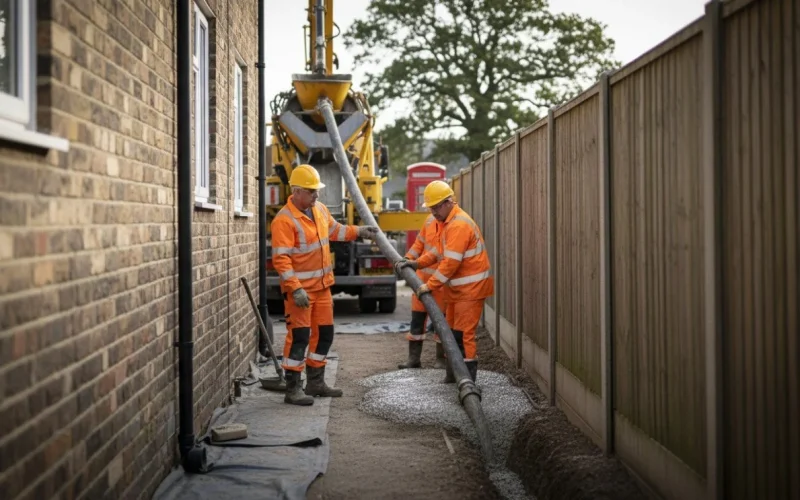
Construction projects in the UK don’t always get to take place in wide open spaces. Instead they’re often squeezed into tight driveways, narrow roads, or the back of a residential property where materials just can’t be delivered the usual way.
That’s where specialist concrete pumping services come in handy. They mean you can get concrete delivered to the most tricky of locations without having to resort to wheelbarrows or truck discharge on the ground.
Whether you’re working on a tricky basement pour, a fashionable rear extension or a commercial site with limited entry points this sort of thing is a huge timesaver. It reduces the amount of labour you need to bring in, and you can be pretty sure the quality of the finish is going to be a lot better in the end.
What is Concrete Pumping?
So what is it that makes concrete pumping so useful? Put simply, it’s a way of moving freshly mixed concrete from a delivery lorry to the exact spot where it’s needed – often in a way that doesn’t require you to clear half the site to get there. Direct pumping also helps maintain quality by reducing segregation and water dilution risks.
It’s often teamed up with ready mix concrete pumping, where ready-mix concrete is produced at a batch plant to engineered mix design specifications and delivered fresh to site for slabs, foundations and other pours. Concrete pumps also transfer wet ready mix concrete and liquid screed into hard-to-reach areas.
How it works:
The concrete arrives in a mixer truck
You set up the pump equipment on site
The concrete is fed into a hopper and then
hydraulic pressure pushes it through a ground line or up a boom — the two main pump types used for hire are ground line pumps with flexible hoses and boom pumps with a robotic arm for precise delivery
And hey presto – the concrete is exactly where you want it to be
It’s something you see every day in the UK in domestic and commercial projects alike, providing a precise concrete placement service.
Why You Need Concrete Pumping for Difficult Sites
There are loads of construction projects in Hertfordshire, Buckinghamshire and other parts of the UK that just wouldn’t be possible without this sort of thing. They can be characterised by none of the following:
Narrow driveways or gates that bar entry to your site
Garden extensions where there simply isn’t room to get large equipment in
High-rise buildings where you can’t get a decent run up to get the concrete to the top
Basement or underground pours where it’s just impossible to get it to the bottom
Busy city-site projects
Without a solid access strategy, this can all lead to long, hard and unproductive days on site, moving concrete around manually.
Concrete pumping eliminates all of these issues by getting the material straight to where you need it, bypassing tight spaces, steep slopes, mud and other structures that stop standard trucks reaching the pour. It can also reach deep basements and narrow urban plots where traditional methods cannot, which is vital on any construction project. That matters whether you’re working on a high-rise building, residential foundations, large commercial slabs or other challenging terrain.
Types of Concrete Pumps
When you’re looking for a concrete pump to hire, understanding the different types out there can be really helpful.
1. Line Pump
A line pump is a smaller, trailer-mounted unit that uses flexible hoses laid along the ground to snake concrete through narrow pathways, making it ideal for smaller projects and awkward access where larger machinery is impractical.
Ideal for:
Smaller residential projects
Small pours
Tightly-packed garden developments
Pros:
The hoses are super flexible so they can go almost anywhere
They’re good at navigating really narrow spaces
They’re often pretty cost-effective – especially for smaller jobs, thanks to lower labour costs
That added benefit can also improve safety and support stronger results through steadier placement.
2. Boom Pumps
A boom pump is a truck-mounted unit with a massive, remote-controlled robotic arm that unfolds to lift and guide the concrete hose over obstacles. In concrete pumping services, boom pumps are ideal for high-volume, multi-storey, or complex commercial concrete pours because of their reach and flexibility.
Ideal for:
High-rise buildings
Large commercial pours
Any job that needs precise placement high up
Pros:
They get the job done fast, with boom pumps able to move high volume and place concrete quickly on larger pours
Less manual handling is needed
Ideal for large pours – as long as you can get the pump set up
Depending on pump size and power, output typically ranges from around 50 to 180 cubic metres per hour, which affects how much concrete can be placed efficiently on bigger jobs.
Both systems are standard fare for professional concrete pumping services, but the type you need will depend on the project specifics.
Best Practices on Tricky Sites
When you’re working on a tricky site like this, planning ahead is key, including matching the pump type to the scale of the project and site access conditions. You need to make sure the right people are on hand and that the right arrangements have been made to get the pump sorted.
Check access routes and setup space before the day of the pour
Make sure the ground is suitable for the pump to operate safely
Confirm where the concrete wagon will park and how the pour will be managed
A steady, controlled flow helps reduce cold joints, improve structural strength, and keep the work area cleaner.
With the right setup, concrete pumping services provide a reliable way to keep jobs moving with greater efficiency and fewer delays.
Key things to keep in mind:
Get a full site survey before you even start looking for a pump
Clear the area where you’re going to set up the pump
Remove any obstacles like cars or other bits of kit
double-check the hose or boom reach can get to where you need it to
Make sure you’ve got all the right timing sorted out with the concrete supplier
Prepare the sub-base and form before the pump arrives
Good planning improves safety, reduces labour costs, and helps achieve smoother pours. Planning ahead reduces delays, accelerates construction projects, and means you get the job done more quickly and efficiently while enhancing structural integrity.
Benefits of Working with a Concrete Pump Hire Pro
Using a pro for a concrete pump hire in Hertfordshire is a lot better than trying to do it yourself. Here’s why:
You get the job done a lot faster
There’s much less need for manual handling
The finish is going to be a lot better in the end
You can get to those tricky areas that would otherwise be inaccessible
Less risk of spillage, less waste, and a cleaner workspace during pouring
Their expertise also matters, as a reliable service with professional operators keeps concrete flowing steadily for better structural strength and results.
Pro operators also make sure the pump is set up and run correctly, which means less chance of problems with the concrete.
Practical Tips for Restricted Access Ready Mix Concrete Delivery
Just to make sure the pump hire doesn’t go wrong, here are a few key things to bear in mind:
Make sure you’ve got the right pump for the job (line or boom)
Get the access route measured properly before you even start looking for a pump
Make sure there’s enough space to get the pump setup safely
Keep in touch with the supplier about site restrictions, and confirm delivery details early if you need same-day or next-day ready-mix concrete for urgent work
Have plenty of spare water on hand to keep the pump clean
Get your team sorted and ready to go before the concrete arrives
Don’t leave it too long to get the pump sorted out (remember, concrete sets quickly)
Keep an eye on the mess and make sure the surrounding area isn’t going to get damaged.
Get your planning sorted, and the pump hire should be a huge success. Site access, clear working space, and coordination with delivery schedules are must-haves for a smooth operation, especially for customers who need everything to run cleanly and to the right safety details.
5. Is pumping a viable option for small domestic projects?
Yeah – line pumps are pretty common in residential extensions, patios, or garden bases where getting around is really tough. Boom pumps are typically used for larger construction projects because they can move high volumes quickly, while line or ground line pumps are often the efficient choice for smaller domestic jobs since they can reach awkward spaces without oversized equipment.
Conclusion
For construction projects where access is a nightmare, concrete pumping services are basically the best solution you’ll find in the UK.
Whether you’re using a line pump for a tiny backyard job or a boom pump for a big commercial pour, pumping lets you get the concrete exactly where you need it, with fewer workers and less hassle.
Working with a good provider who offers mix concrete pumping and concrete pump hiring in Hertfordshire is key to keeping things running smoothly even when everything is getting crazy.
If you’ve got a site that’s tricky to get to, then using a pro to get the concrete to you is the way to go – it’ll save you time and stress, and make sure your project looks top-notch regardless of the conditions.
Not Sure If We Cover Your Area?
Get in touch with our team today and we’ll confirm availability for your location and project requirements.